Access to prices and online shopping
Overview of your purchased items
Contact your sales representative and clerk
Educational materials
News about industrial seals
Information on new products and services
Exclusive hints and tips
Controlled tightening of flange joints with a tightening protocol. Torque Service team, Hytorc hydraulic machines, certification according to EN 1591-4. We carry out installation and training for the customer's own employees.

Certification according to EN 1591-4
Hytorc Hydraulic Machines
Equalizer device for non-concentric flanges
Tightening with 2 or 4 heads simultaneously
Tightening Protocol
Up to 50% of flange joint leaks are caused by improper assembly. In most cases, installers do not have a specified tightening torque and tighten by guesswork. Even when they do, the result depends on the lubricant - using the wrong lubricant can increase or decrease the resulting clamping force by up to three times.
Causes the gasket not to seat properly around the entire circumference, and the joint does not seal, even though it was "tightened". Controlled tightening eliminates this human factor.
The result is a uniform preload in all bolts and a uniformly compressed gasket around its entire circumference.

We will come, tighten, and issue a protocol. Ideal for critical joints, one-time interventions, or if you do not have your own assemblers.
Controlled tightening as part of the shutdown. We will ensure calculations, coordination, and assembly with a protocol – without disrupting the schedule.
We will provide calculations, procedures, and erasure specifications. We will train your team according to EN 1591-4 so that they can handle controlled assembly independently.
Our solutions help increase the reliability of our clients' operations.


On our blog, you will find case studies from the chemical industry, energy sector, and other fields.
View case studiesLeakages appeared at the penetrations of the hydrogen reactor during operation due to a sudden drop in ambient temperature, which led to the ignition of the escaping hydrogen.
Operating parameters: Temperature: 550 °C, test pressure: 0.3 MPa, medium hydrogen.
Our solution: Based on a technical assessment, a change in the type of highly deformable sealing was proposed, which is capable of better responding to changes in load at the flange joint.
The new solution responds better to large thermal expansions of the flange connection. The result is a more stable operation of the equipment and a reduction in the repeated occurrence of leaks.
The Torque Service group consists of experienced technicians and assemblers with many years of experience in the assembly of seals and tightening flange joints of both pressurized and non-pressurized equipment. Each team member is certified according to ČSN EN 1591-4.
This documents for a specific tightened joint the type of sealing used, the method of lubrication, the value of the tightening torque, the type of tightening tool, the date, and the person performing the assembly.
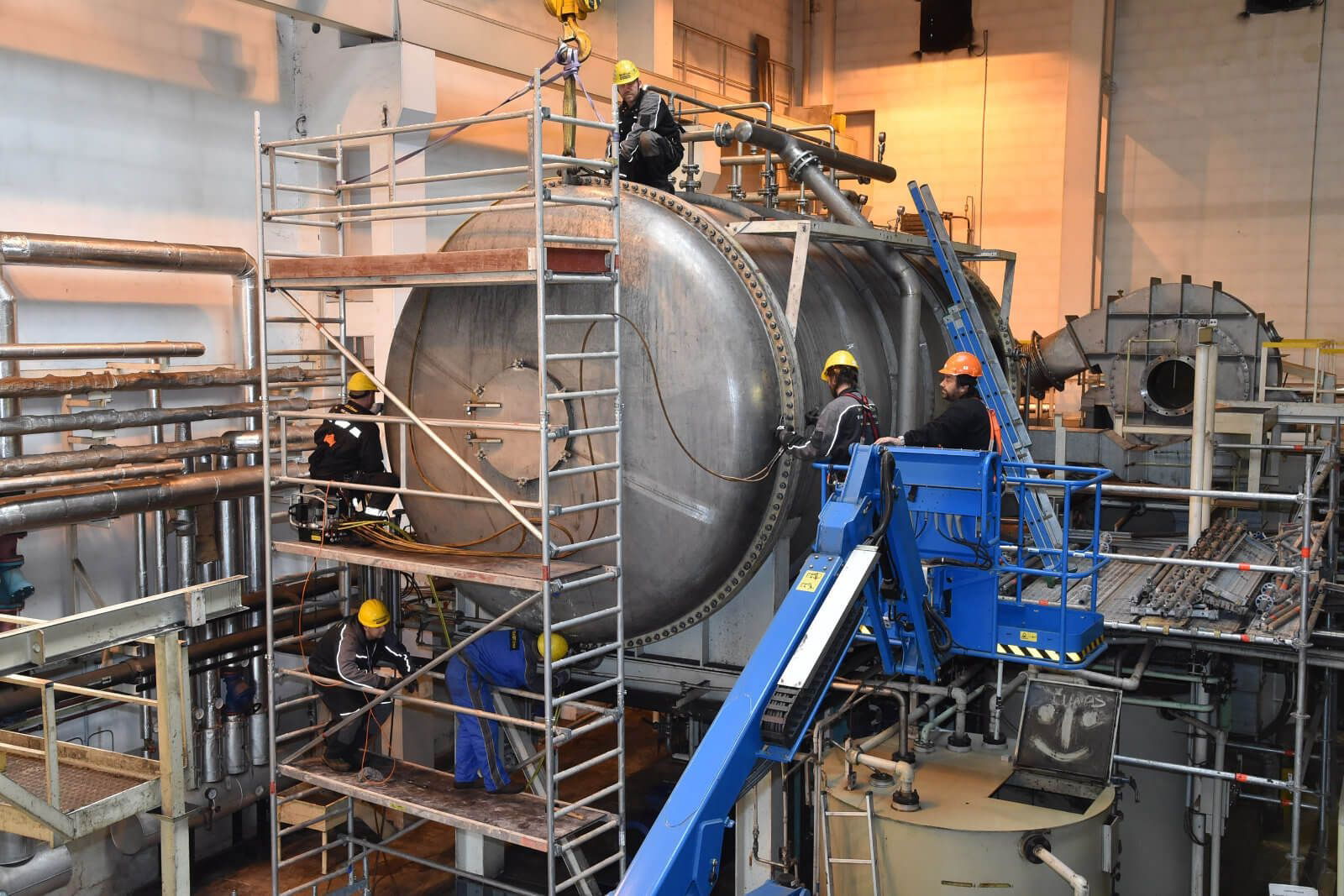
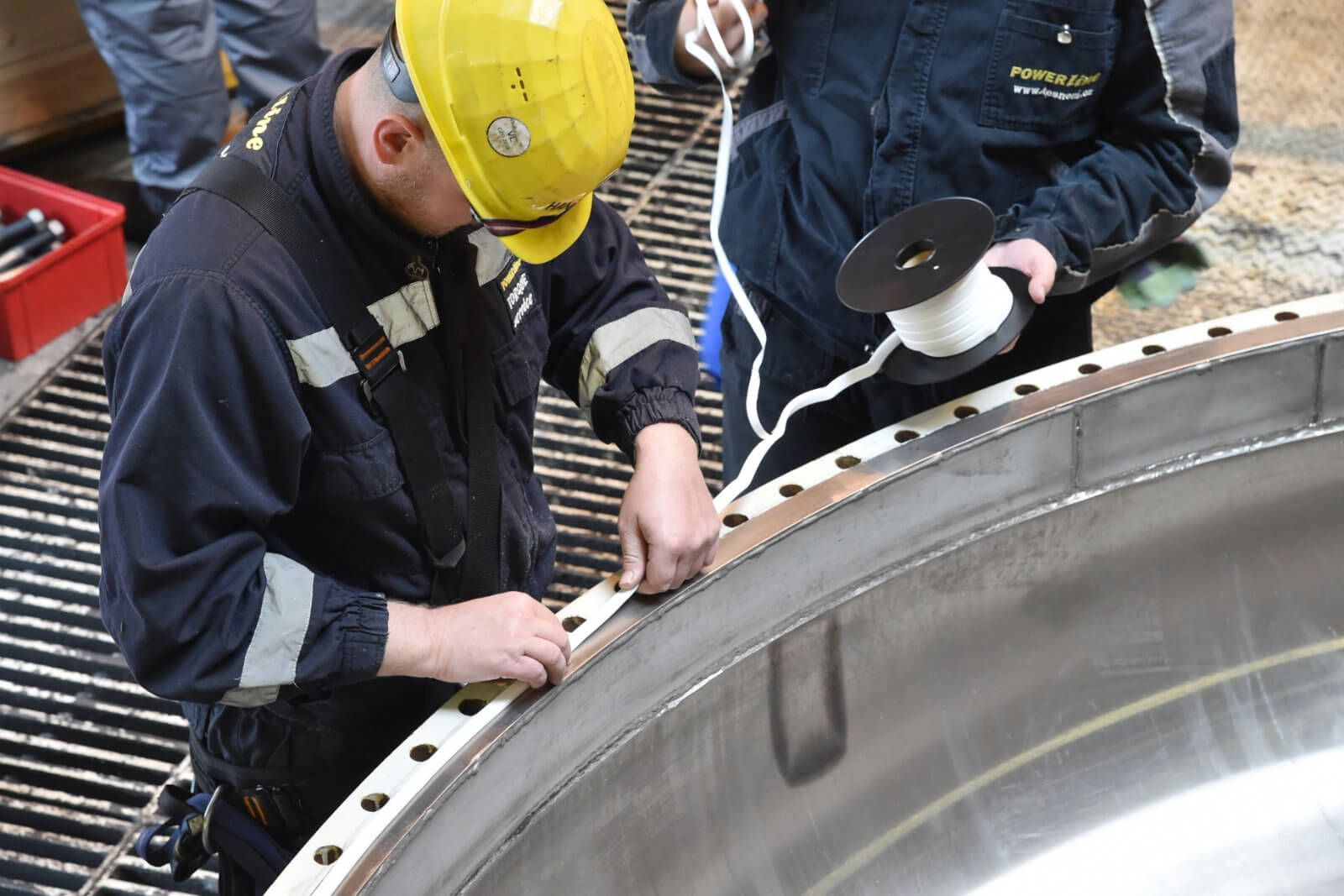
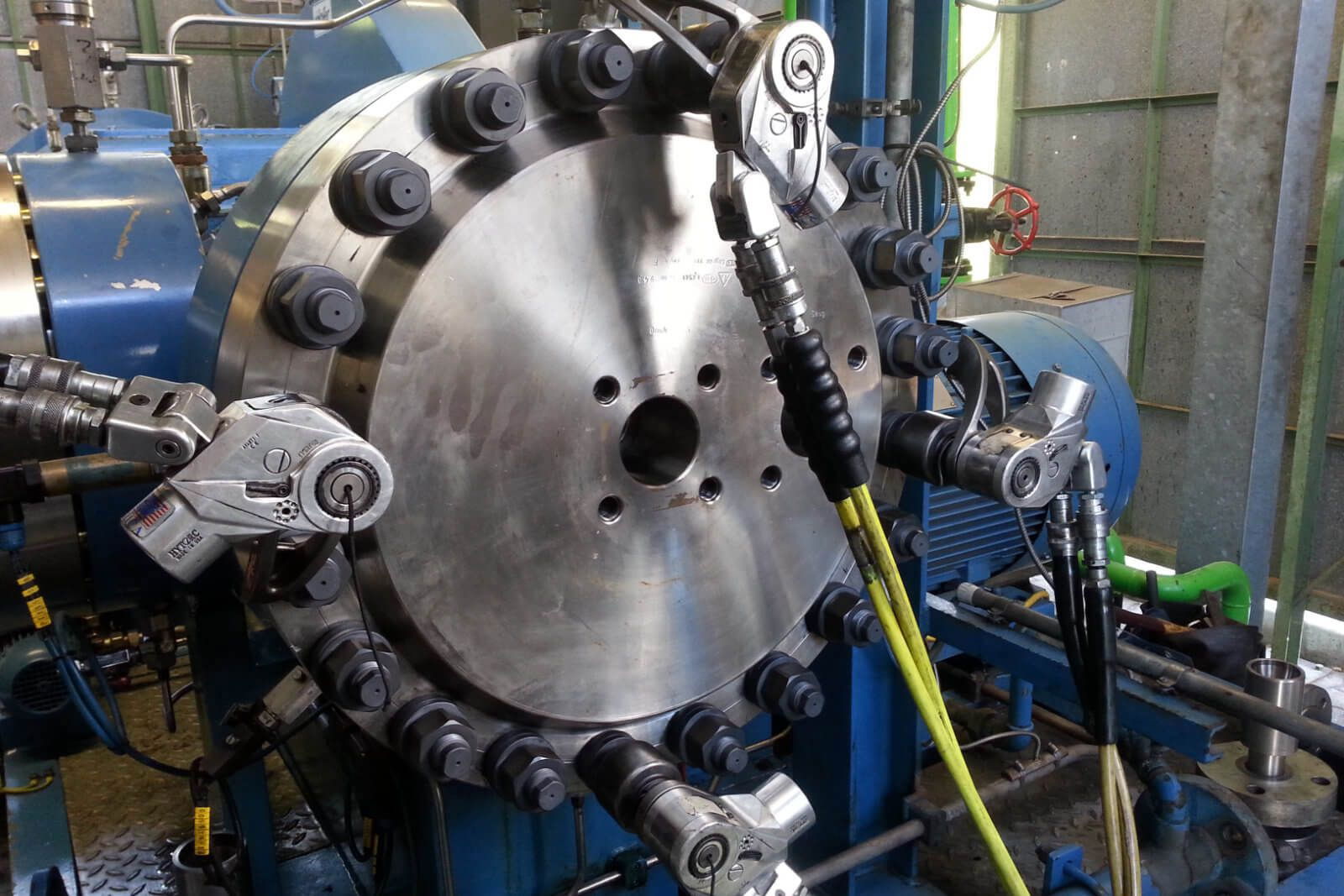
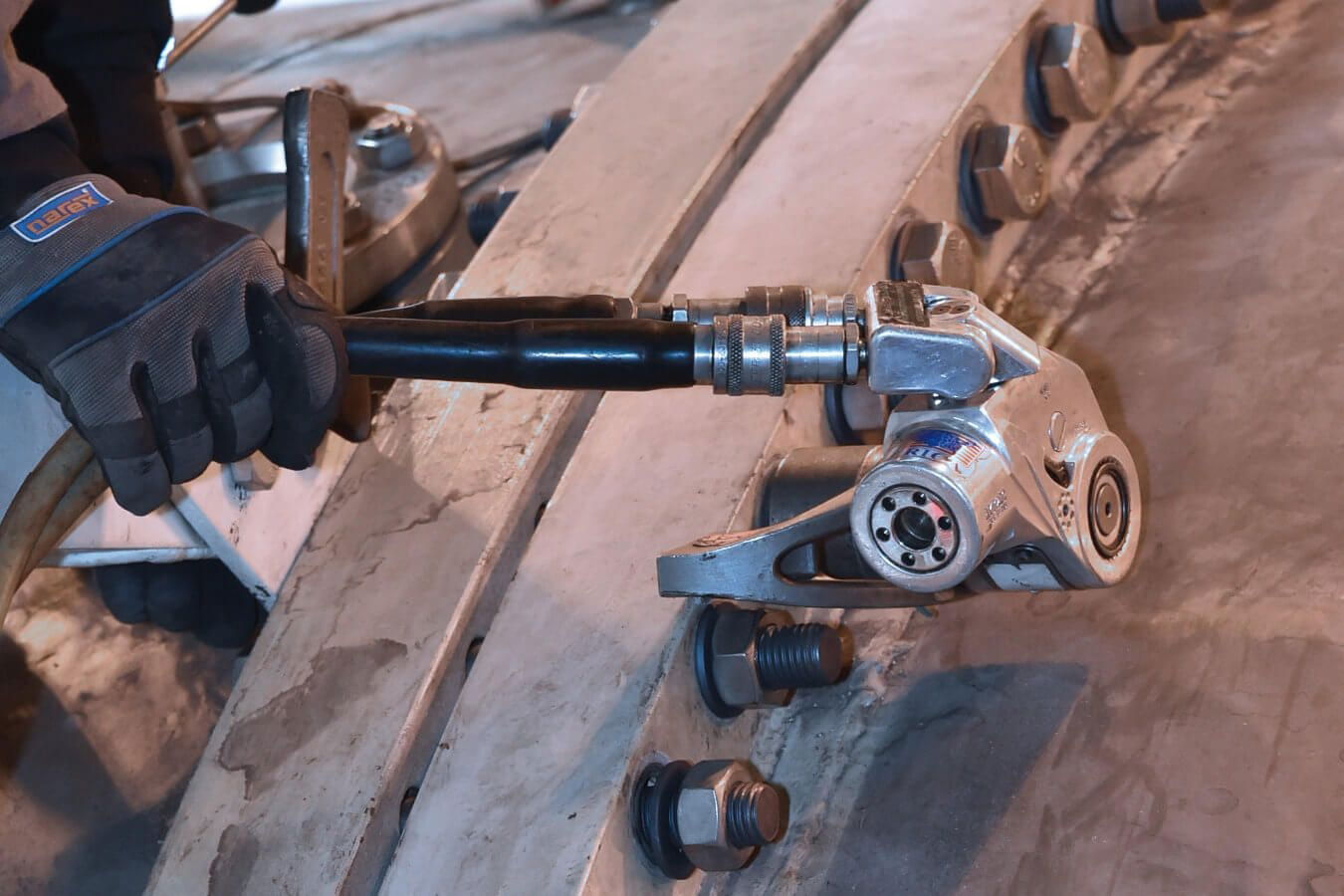
We have several specialized assembly vehicles equipped with hydraulic and Hytorc pneumatic tightening machines of various sizes and power. We tighten with two or four heads simultaneously, ensuring even distribution of preload without sequential loosening of other bolts.
For cases of non-concentric flange connections, we have Equalizer hydraulic devices available to ensure alignment, flange spreading, or flange pulling.
We would be happy to conduct a non-binding technical consultation.

The protocol documents the achieved torque values or axial forces on each bolt, the lubricant used, tools, and the assembly procedure. It serves as a basis for potential analysis in case of future leaks and, in regulated industries, acts as evidence for operational or safety audits.
Yes. We will prepare complete materials and train your staff on-site. The result is a team capable of performing controlled assembly correctly and independently with their own tools.
We have Equalizer hydraulic devices designed to ensure alignment, spreading, or pulling of flanges. Misalignment of the flange is therefore not an obstacle for carrying out controlled assembly.
What is included in a comprehensive solution for flange joint sealing?
© Pokorny industries s.r.o. 2026 - all rights reserved
Made by servisdesign
You don't know what to do?