Access to prices and online shopping
Overview of your purchased items
Contact your sales representative and clerk
Educational materials
News about industrial seals
Information on new products and services
Exclusive hints and tips
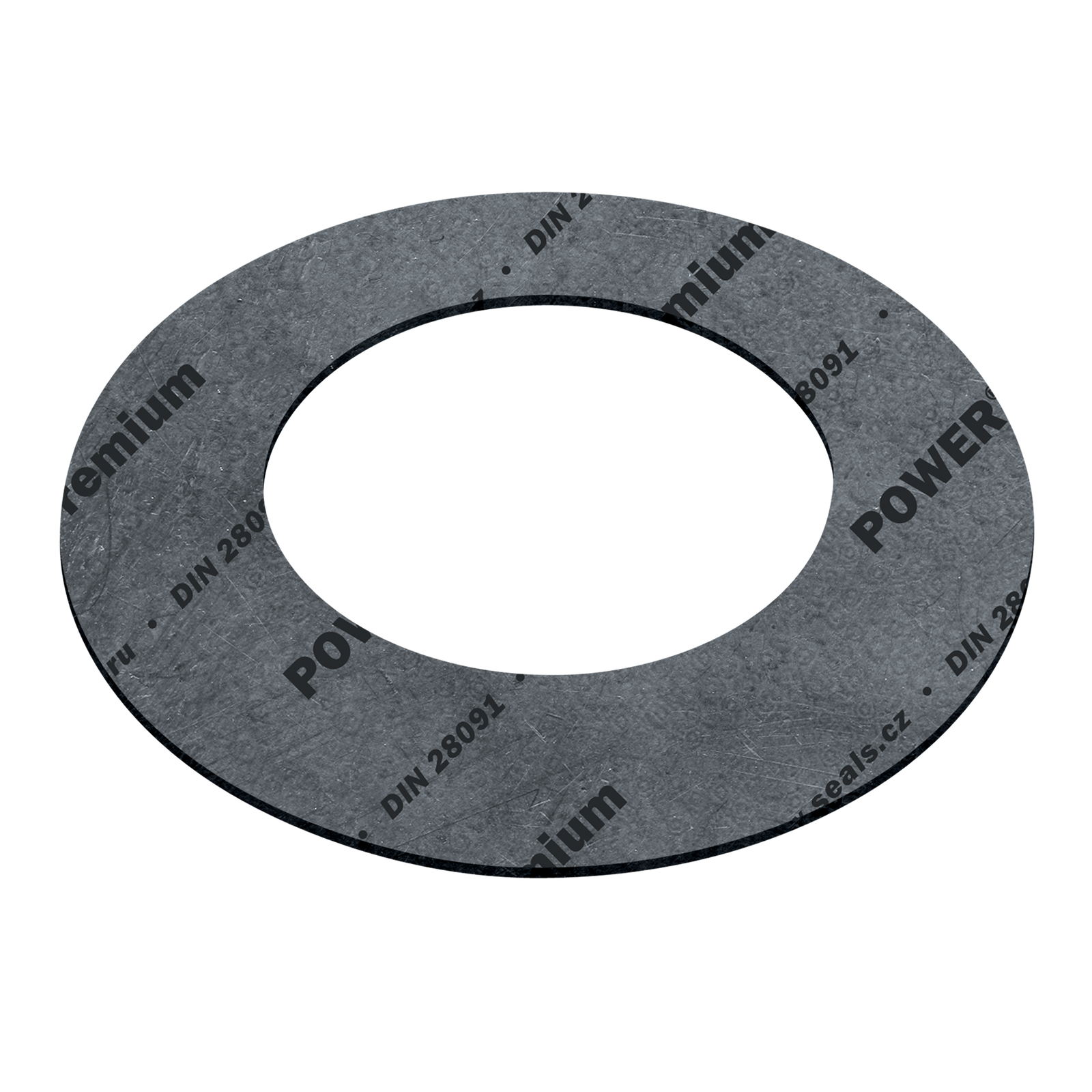
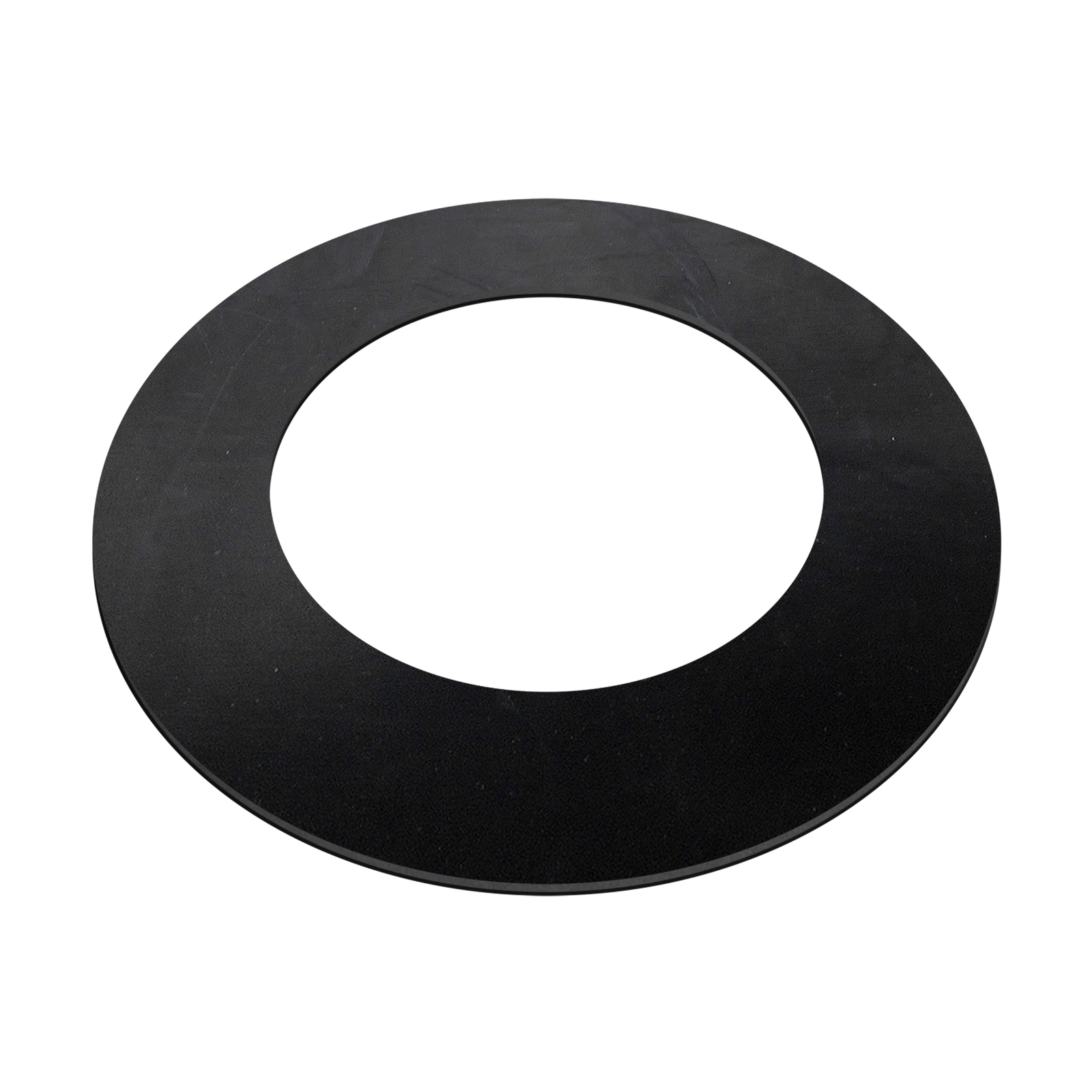
POWERgasket 100–400 fiber-reinforced rubber gaskets made from aramid, carbon, and graphite fibers. According to ČSN, EN, DIN, ANSI standards, and also custom-made. Thicknesses of 0.5–3 mm.
These values are approximate and may be influenced by other factors. We will be happy to consult with our expert to make sure you make the right choice.

Seal made of aramid fibre rubber plate with NBR binder. For low pressures and temperatures. Dimensions according to standards and to order.
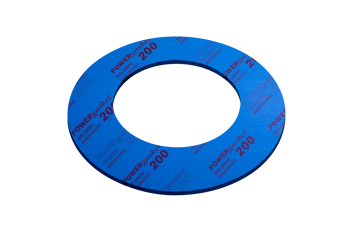
Seals made of a fibre-rubber plate made of a mixture of aramid and cellulose fibres with NBR binder. For medium pressures and temperatures. Dimensions according to standards and to order.

Seals made from a fibre-rubber plate made from a mixture of aramid fibres with NBR binder. For medium to high pressures and temperatures. Dimensions according to standards and to order.

Seal made of aramid fibre rubber plates with CSM binder. Good chemical resistance, for various aggressive media. Dimensions according to standards and to order.
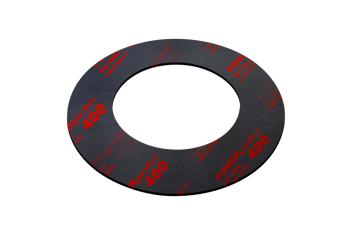
Graphite and carbon fibre fibre fibreboard seals with NBR bonding. For the highest pressures and temperatures. Dimensions according to standards and to order.
They are a modern, safe replacement for asbestos gaskets (formerly referred to as "klingerit") and are among the most widely used sealing materials for standard industrial flange joints. They combine reinforcing fibers (aramid, carbon, or graphite) with an elastomeric binder (NBR or CSM), resulting in a material with excellent mechanical strength, resistance to extrusion, and broad chemical compatibility.
Our fiber-reinforced rubber flange gaskets are produced under our own brand POWERgasket in five performance classes. The gaskets are supplied according to ČSN, EN, DIN, and ANSI standards as well as custom-made non-standard production.
Fiber-reinforced rubber gaskets are ideal for standard and moderately demanding industrial flange joints up to 150 °C:
We will help you choose the right variant and point out the limits of the material.
The temperature resistance of fiber rubber gaskets is limited by the elastomeric binder. For NBR and CSM binders, the actual operating range is from −20 °C to a maximum of +150 °C. It is commonly claimed in the market that fiber rubber gaskets can be used "short-term" at temperatures of 300–350 °C. This claim is misleading because the term "short-term" is never precisely defined in this context and leads to premature leaks or failures in practice.
Adding graphite, aramid, or carbon fibers does not increase the temperature resistance of the entire gasket – while these fibers are more temperature resistant, the critical property of the entire composite is determined by the weakest component, i.e., the rubber binder.
If your application requires operating temperatures above 150 °C, fiber rubber gaskets are not the right choice. For higher temperatures, we recommend [graphite gaskets] (up to 550 °C) or spiral-wound gaskets with graphite filling.
Klingerit was the historical name for gaskets made from asbestos sheets, which are now banned due to their health hazards. In technical practice, the term "klingerit" is still informally used as a general designation for fiber rubber asbestos-free sheets that have replaced asbestos gaskets. They are technically more efficient and safe for health.
The actual operating limit is +150 °C, determined by the temperature resistance of the elastomeric binder (NBR or CSM). Claims of "short-term" use up to 300–350 °C, which commonly appear in the industry, are not precisely defined and lead to gasket degradation in practice. For temperatures above 150 °C, we recommend graphite gaskets or spiral-wound gaskets with graphite filling.
The series differ in the type of reinforcing fibers and performance class. The 100 series uses standard aramid fibers for lower pressures and temperatures. The 400 series is made from graphite and carbon fibers with the highest mechanical and temperature resistance within the fiber rubber group. For chemically aggressive environments, the optimal choice is the 350 A series with CSM binder.
Fiber rubber gaskets with NBR binder are not suitable for strongly oxidizing acids (HNO₃, HClO₄) or for temperatures above 150 °C. For aggressive chemical media, we recommend the 350 A series (CSM binder) or switching to PTFE gaskets. For high temperatures, choose graphite gaskets.
Yes. We cut flange gaskets in all variants of the POWERgasket series precisely according to drawings, samples, or customer dimensions. We work according to ČSN, EN, DIN, and ANSI standards.
© Pokorny industries s.r.o. 2026 - all rights reserved
Made by servisdesign
You don't know what to do?